I can't code. I directed 20 Claude sessions to build a 3D game anyway.
I'm 18 years old and have almost no programming experience. Starting from scratch, I used AI to vibe-code a 3D game: Wizard of Oz. In this article, I share the pitfalls I encountered and the lessons I learned, hoping to show how ordinary people can use AI to bring their ideas to life.
1. An AI Development Team Built Around Claude
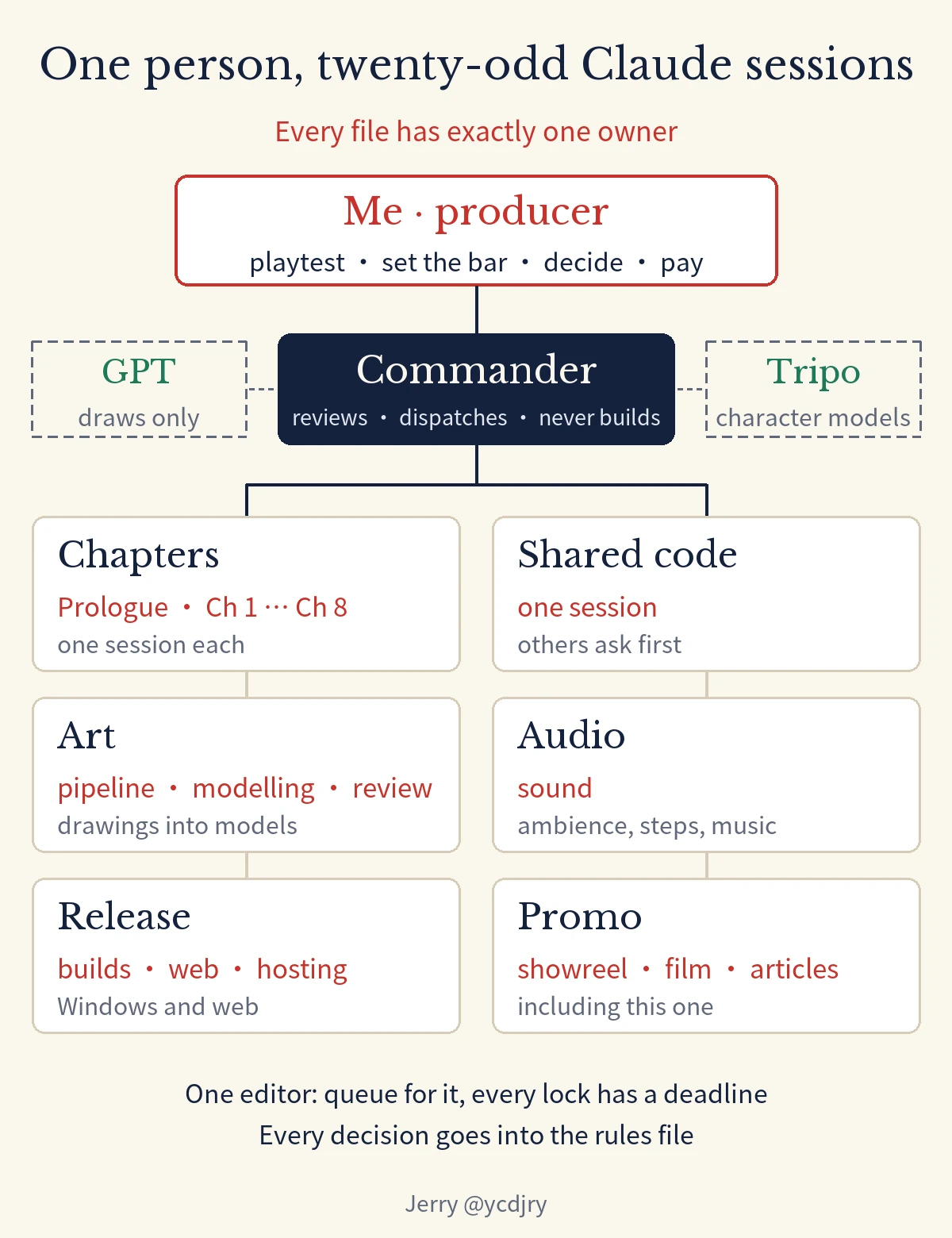
In a nutshell, I'm the executive producer, while Claude handles the development.
I run more than 20 Claude sessions, all coordinated by a central session I call the commander. I usually speak only to the commander, which assigns work to the other sessions based on what I say. Some sessions develop individual chapters, while others review whether ChatGPT-generated images meet our requirements. Other dedicated sessions review the 3D models, sound effects, story, and promotional strategy.
Claude is at the core of the game’s development. ChatGPT generates images, including stylized, textured lettering, as well as four-view reference sheets for 3D assets. Tripo AI generates more complex 3D models, such as characters. Blender handles simpler models, such as Dorothy’s house. The game is built in Unity.
We keep chapter briefs, key decisions, and playtest notes in our project documentation. That way, a new session can read about our development history and the pitfalls we encountered before continuing the work. When a task involves shared code, the commander assigns ownership of each file before work begins.
2. The Surprises AI Had in Store
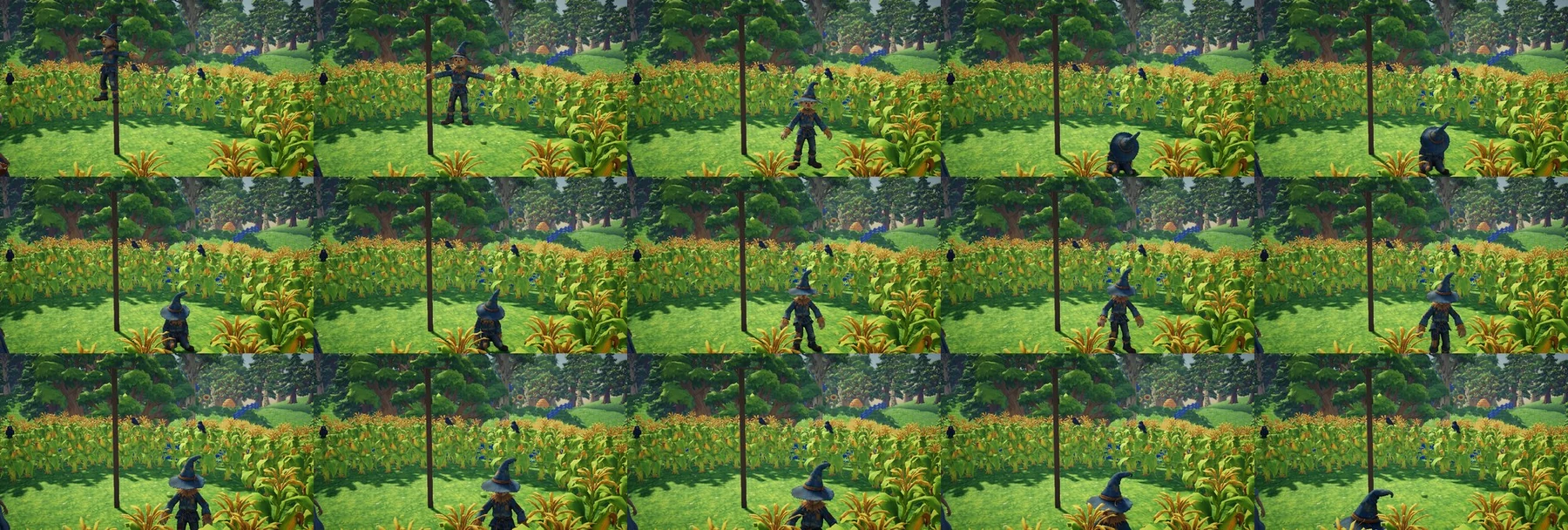
In Chapter 2, Dorothy helps the Scarecrow down from his pole. I gave Claude only the general outline. To my surprise, Claude choreographed the entire sequence on its own, without needing detailed instructions: the Scarecrow slides down the pole and collapses in a heap, then stretches out both arms and takes a few unsteady steps like a child learning to walk. Only when he regains his balance does the music start again. To me, this is a sign of the model’s intelligence.
This reminded me of Addy Osmani’s article “You’re Probably Overprompting Claude.” His advice is to give Claude a goal and a way to verify the result.

In its study “Agentic coding and persistent returns to expertise,” Anthropic analyzed around 400,000 interactive Claude Code sessions. It found that, on average, humans made about 70% of planning decisions, while Claude made about 80% of execution decisions.
The Scarecrow scene illustrates this division of labor: I design the player’s path, Claude works out how the Scarecrow should move, and I play through the result and judge whether it works.
3. The Joy of Making Games
One of the joys of making games—something players don't always get to see—is slipping little ideas of your own into the world. To make the game more fun to explore, I hid a collectible emerald somewhere in every chapter, along with a number of hidden achievements. Many of those achievements were not planned at the start; they emerged naturally during development.
For example, in Chapter 2, if you insist on following the wrong yellow brick road all the way to the end, an achievement appears: “How about we explore the area ahead of us later?” Some achievements came from bugs. While testing the locked door in Chapter 1, I accidentally shut Toto inside the house. I had not added a button to open the door, so the story got stuck. Then I realized this was actually quite difficult to trigger by accident, so I turned it into a hidden achievement. Its Chinese name, 关门打狗, is an idiom that literally means “shut the door and beat the dog.”
Players also earn an emerald for every hidden achievement they unlock. Some emeralds and achievements are hidden in truly devious places, but if you collect 20 emeralds without consulting a guide, you can unlock the ultimate secret at the bottom of the achievements screen. Beyond achievements, there are more ways to make the game fun. For example, when the Tin Woodman chops down a tree, control automatically switches to him.
4. Set Clear Standards for AI
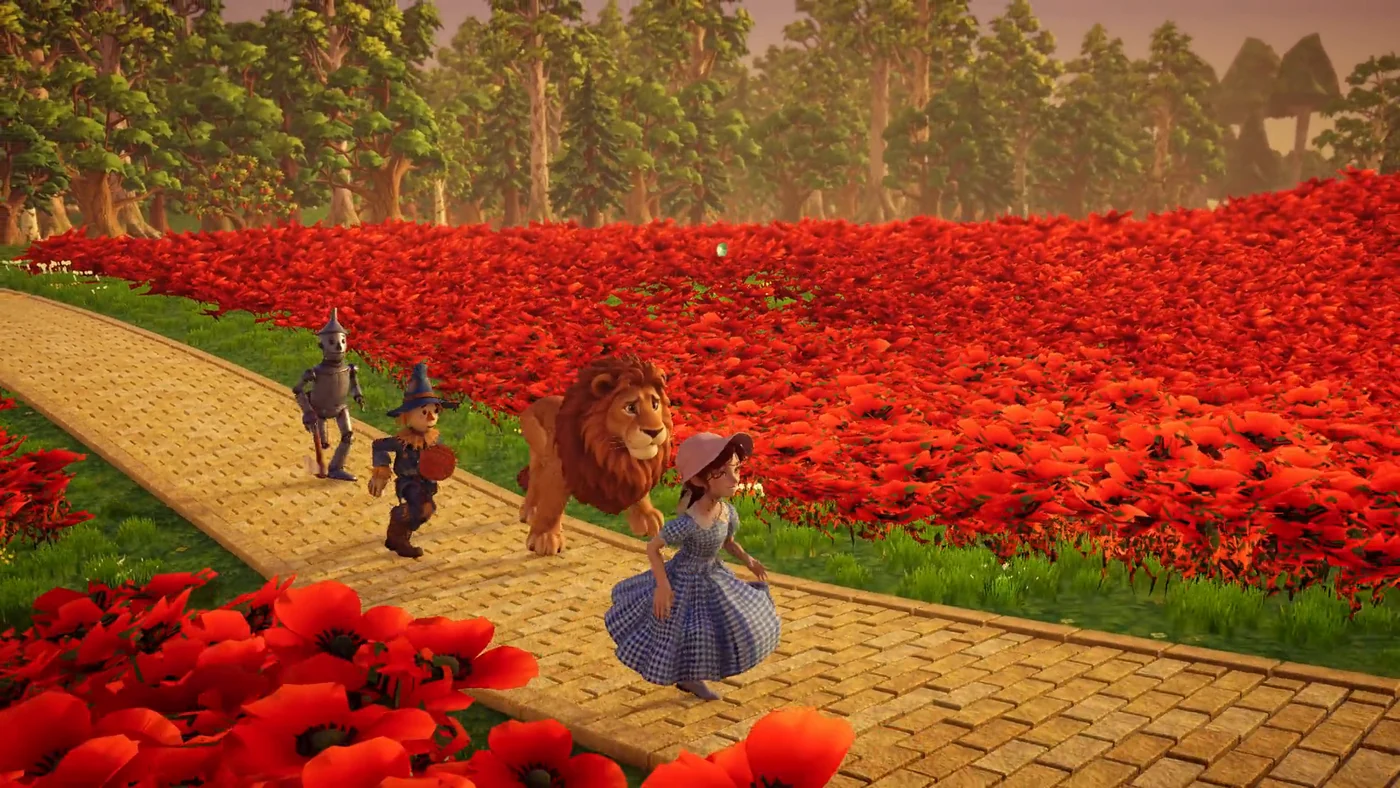
ChatGPT once drew a beautiful cornfield illustration for Chapter 2, but it looked nothing like the scene in the game. That was when I realized I needed to set a clear standard for AI-generated artwork: every illustration of an in-game scene had to closely match how that scene actually looked in the game. Since then, whenever an illustration depicts a scene in the game, I first require a screenshot from the game as a reference.
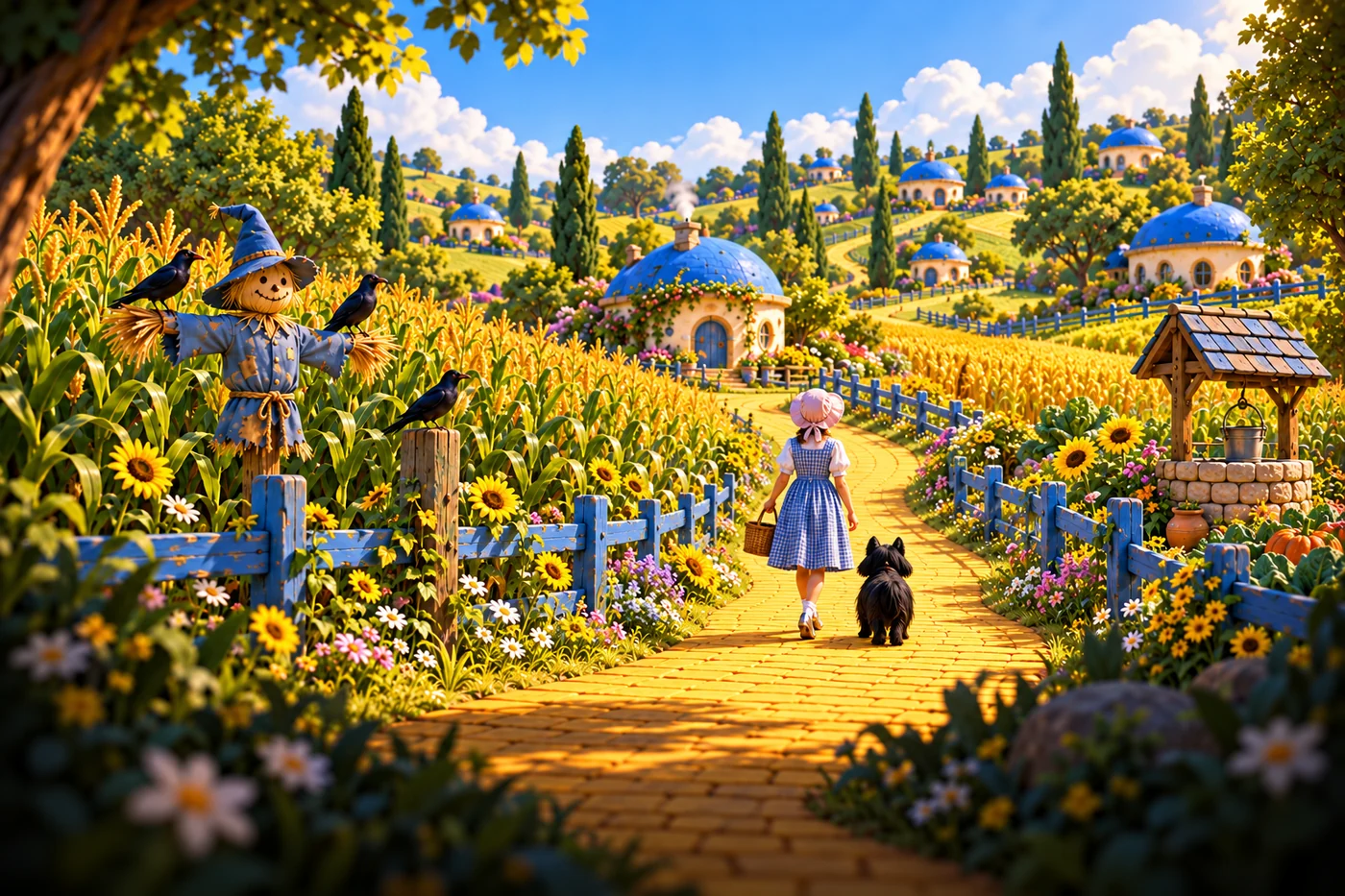
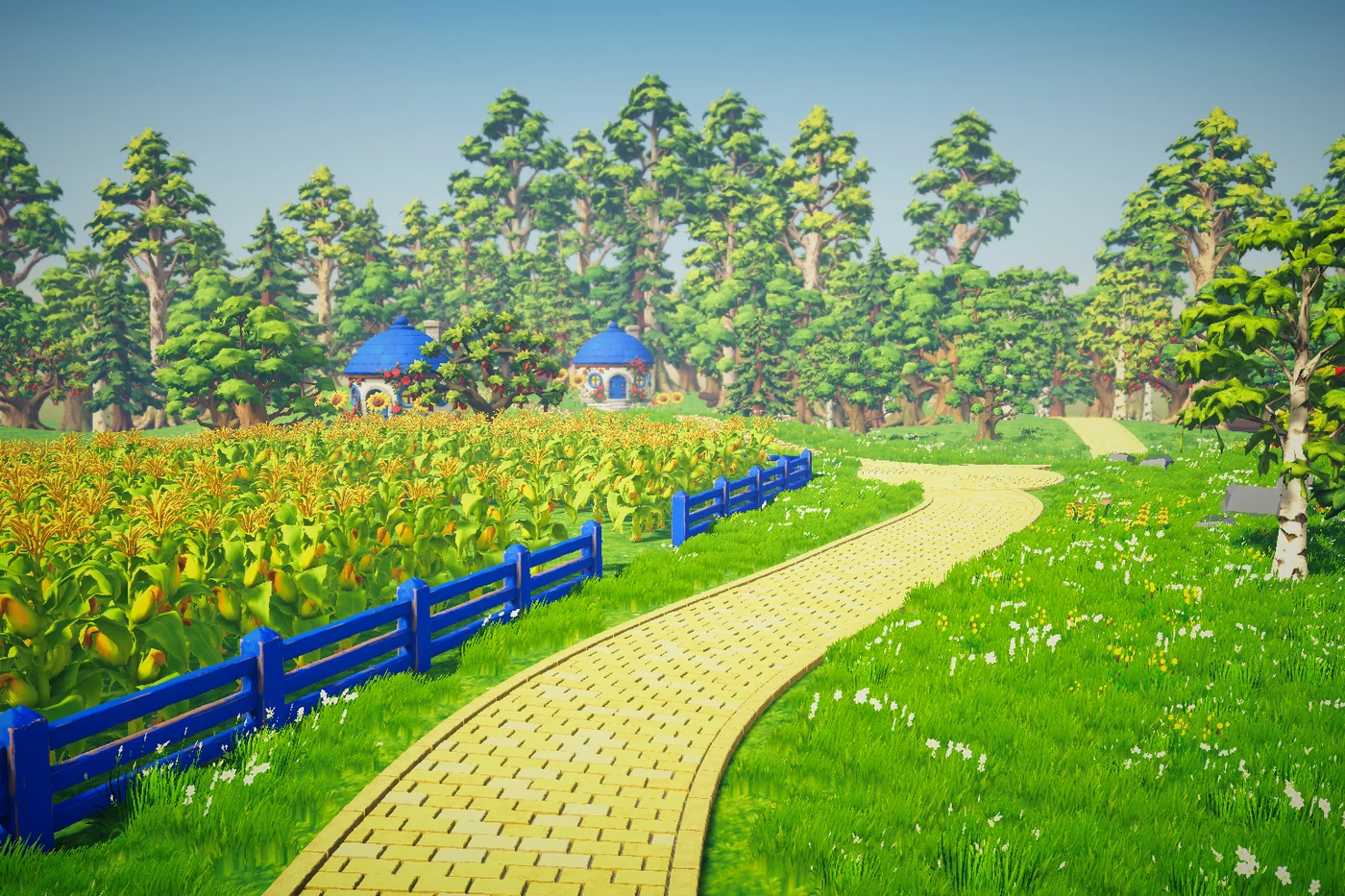
Testing rigged character animations and actual gameplay often reveals 3D modeling problems. Characters might clip through one another, or complex animations might leave them in bizarre poses and make their movements look physically impossible. This is a major development challenge. The solution I eventually found was to set specific red lines, have AI simulate a playtest and capture screenshots from multiple angles before my review, and then give feedback. If a model needs to be regenerated, I can also trigger the relevant workflow in Blender or Tripo AI through command-line tools. This workflow requires capable models and computing resources, and it can consume a lot of tokens, so having enough usage capacity is important.
5. When AI Makes You Less Productive
These are pitfalls I actually encountered:
Once, while I was playtesting Chapter 8, Dorothy had just clicked her heels three times when the game froze. Another Claude conversation had changed a project file, causing Unity to recompile while I was playing. After that, I assigned a single owner to each file, allowed only one session to use the editor at a time, and made all other sessions wait while I was playtesting.
Another time, I asked a different AI assistant to investigate how to save some Claude usage. It immediately triggered a usage reset, even though I had used only 17% of my weekly allowance. Since then, I've required AI to present the options for my approval before making purchases or resetting usage limits.
Those are just two examples. In the end, I drew two conclusions:
Set the necessary red lines and permissions. Do not skip them because they seem troublesome.
Use a good model whenever you can. It is very important that the model understands what people are saying; that saves a great deal of time and effort. I will emphasize this point below.
6. Knowing When to Spend—and When to Let Go
In a world where imperfection is part of the process, chasing perfection at all costs can do more harm than good. I originally planned to make the game playable in a browser, but the unpacked build was nearly 2 GB. After trying all kinds of approaches, I had to give that up and make the game available only as a desktop download. This will undoubtedly mean fewer people get to try the game, but it allows me to deliver a better experience to those who do.
AI-powered 3D modeling tools have improved considerably, but they still make surprisingly basic mistakes in real-world development. Eventually, after too many frustrating attempts, I turned to Claude Opus 5.5 to generate the Emerald City directly. Character modeling and rigging—the skeleton and controls that allow a 3D character to move—presented another challenge. If I could give myself one piece of advice before starting game development, it would be this: be willing to pay for the right tools and assets.
Some tools and assets may seem expensive, but looking back, the money I spent was well worth it because it saved me so much time.
Warren Buffett famously said: “It’s far better to buy a wonderful company at a fair price than a fair company at a wonderful price.” In other words, if a company is good, it can still be worth buying at a relatively high price as long as the price is reasonable; for a bad company, even an attractive price is not a reason to buy. The same logic can be applied to game development.
Do not be stingy about paying for good assets and materials. The same applies to good models. In my experience, if you can use Claude, choose it over ChatGPT, and be especially cautious about switching to models from China. If your budget allows, sticking with a capable model can save the time and technical costs of switching between alternatives. Even if there is a premium, pay it as long as it is reasonable.
Finally, if a problem can't be solved even by spending money—and continues to drain your time and energy—it may be time to let it go. That too is a choice and a trade-off. I originally planned to include more of the story to stay closer to the original book, but given the development timeline and the work involved, I decided to cut some parts.
7. My Approach to an AI Game Studio
Take splitting up the web build as an example. I decided to load the shared world assets and the map where Dorothy starts first, then download nearby areas in the background. The work involved three parts: loading map areas on demand, building the loading screen, and downloading shared assets. We defined a browser test: first slow down the network, enter Chapter 1 while other areas are still downloading, then walk to the boundary of the next area and see whether the game waits for it to finish loading before letting Dorothy through. The feature had been implemented, but the complete end-to-end browser test had not yet been run. This taught me to track implementation and verification separately and to decide in advance what I need to see in the game before calling something finished.
- Build one playable scene first. The key is to polish one scene and use it as a reference for all the others. That's why I think spending 80% of your early development effort on that one scene can be worthwhile. Optimize the underlying code and plan for the future from the beginning, and the remaining chapters can reach the same quality.
- Assign one session to coordinate the others. Give every task and file a single owner, with responsibilities clearly defined.
- Define a player-experience checklist and how to verify it. Give the team a starting point and a set of test conditions, and explain what should be visible in the game.
- Playtest it yourself. Tell the AI commander which chapter has a problem, exactly what happened, and how to reproduce it.
- Document your decisions and keep backups. New sessions need to understand what has already been decided, and you need a way to roll back changes if something goes wrong. Keep a backup on GitHub, too.
- Set permissions for costly actions. Specify who may spend credits, reset an allowance, or overwrite existing work.
- If you keep getting stuck on the same problem, try another approach. You can remake an asset, pay for a better tool, or reconsider whether the feature is worth keeping.
Final Thoughts
Finally, I want to make one thing clear: don't assume that AI will automatically make an ordinary person dramatically more productive. The fact that a tool exists doesn't mean everyone knows about it; knowing about it doesn't mean everyone can use it; and being able to use it doesn't mean using it well. If you've read The Mythical Man-Month, you'll know Fred Brooks's famous argument: there is no silver bullet. If you haven't, I recommend spending ten minutes learning the core ideas of this classic. A silver bullet is a magical solution to a difficult problem. Brooks's point was that no single technology or method can make every complex software problem disappear.
AI tools can eliminate much of the tedious work of writing code, but they don't automatically solve the harder problems: understanding requirements, designing systems, managing complexity, and verifying results. AI makes it easier for people like me to bring our ideas to life, but as Naval Ravikant has argued, judgment is severely underrated. Good judgment matters more than ever.
I once came across a visualization that represented the world’s more than eight billion people as a grid of squares. According to its creator’s rough estimates in early 2026, around 84% of people had never used generative AI, around 16% had tried free tools, around 0.3% had paid for a subscription, and around 0.04% had used AI coding tools to make something. I wrote this article to show what taking that last step can look like for someone who started from zero. Visualization of global AI use.

Visualization created by Damian Player in February 2026. Each square represents approximately 3.2 million people.
Three weeks ago, I couldn't build a complete game on my own. Now I have a 3D game of my own. But that doesn't mean the work of software development has disappeared. It has shifted toward aesthetics, creative direction, testing, coordination, decision-making, and judgment. AI lowers the barrier to creation, but it doesn't remove the creator’s responsibility. We still need to know what is worth creating—and how to make it truly good.
Acknowledgments
Thank you for taking the time to read this. Download the game: wizofoz.cc.
Add me on WeChat: ycdjry.
Download Wizard of Oz for free
Jerry X @ycdjry